

Most supplier relationships in extended workforce programmes are transactional by design.
Each agency has its remit. It fills its roles. It reports its numbers. It competes, quietly or not so quietly, with the other agencies doing the same. Nobody in the supply chain has the full picture. Nobody is supposed to.
That’s the assumption. And for a few extraordinary years, one global enterprise proved it wrong.
This is a story about what they built, what it took to build it — and what happened when short-term thinking dismantled it.
The programme wasn’t broken. It was incomplete.
The MSP programme at this organisation had been running for years, and would go on to run for another five. The light industrial workforce was managed separately through master vendor agreements. There were no catastrophic failures, no audit findings forcing the issue.
But the programme was owned and managed by Procurement. And Procurement had a problem: they lacked the centralised visibility needed to manage cost and compliance across the full picture. The MSP strand and the light industrial strand operated in parallel — different owners, different reporting lines, different rhythms. Suppliers within each strand had no visibility of the other. Nobody had ever put all of those suppliers in the same room.
That’s what the PMO and the COE were built to fix.
Building the strategic layer
The Centre of Excellence was designed to sit above the operational strands — the strategic layer that gave leadership a complete picture across both parts of the programme for the first time. Underneath it, a dedicated PMO held the coordination together: the governance rhythm, the reporting framework, the rules of engagement.
But the most significant part wasn’t the structure. It was the forum.
For the first time, suppliers were brought together — not to be briefed, not to receive updated terms and conditions, but to be consulted on client strategy. They were asked what they were seeing in the market. They were shown data — their own performance data, in the context of the broader programme. They were invited to contribute to decisions that would shape the direction of the work.
The COE met twice a year. Each meeting was carefully orchestrated: agendas designed not just to communicate but to create genuine learning, to surface what the programme needed to do next, and to do it collectively. The meetings had weight because the COE had authority. Suppliers weren’t talking to an operational team. They were participating in strategic direction.
What happened in the room
Suppliers had spent years competing for the same roles. That competition doesn’t switch off because you’ve put people at the same table. What changes is context.
When suppliers could see where they sat in the ecosystem — when they understood the full shape of the programme, what the client actually needed, and where each agency’s genuine strengths lay — the dynamic shifted.
Not immediately. Not completely. But measurably.
Suppliers started referring roles to each other where another agency was better placed to fill them. Recruiters who had never spoken to competitors in a professional context began sharing market intelligence. Individual consultants — people who had spent their careers seeing each other as the competition — started to recognise that inside a well-governed programme, collaboration didn’t mean losing. It meant winning together.
The moment that stays with us came at the close of one of those twice-yearly meetings. A senior representative from one of the core supplier agencies — someone with decades of experience in competitive recruitment markets — pulled us aside to say he was genuinely amazed. Not pleased. Amazed. That a room full of direct competitors had spent the day collaborating, openly, in service of the same client. He hadn’t thought it was possible.
It’s the kind of reaction that tells you something has shifted at a level no governance framework can manufacture on its own.
Then procurement did what procurement often does.
Here’s where the story turns.
The programme had matured significantly. The COE was working. Suppliers were collaborating. Visibility had improved. And the Procurement leaders overseeing the programme — who had championed the COE to gain that visibility in the first place — looked at the collaborative environment they’d helped create and saw something different in it.
An opportunity to drive costs down.
This is a pattern we see more often than we’d like. Procurement functions that are still measured on unit cost savings, still rewarded for squeezing margin, still defined by transactional thinking — they struggle to hold the strategic value of a collaborative supplier environment when they can see competition as a lever. After three years of genuine COE collaboration, the client went to RFP.
The suppliers went straight back into competition mode. The collaborative environment dissolved almost immediately, because it had been built on trust and the RFP signalled that trust was conditional.
But that wasn’t the worst of it.
The decision that broke the programme.
When the RFP concluded, one of the supplier agencies didn’t win the countries with the highest volumes. As a consolation, they were awarded the PMO.
Read that again. An independent, agnostic PMO — the function that had provided neutral governance across all suppliers — was handed to one of those suppliers.
Within months, the other agencies stopped sharing insights openly. Why would they? The independent layer was gone. The function designed to serve the programme’s interests was now run by a direct competitor with their own commercial interests to protect. The data quality collapsed. For nearly four years, the programme operated without decent visibility — not because the tools weren’t there, but because no one trusted the person holding them.
The PMO supplier wasn’t equipped or experienced enough to run it well. The other suppliers weren’t willing to engage as they had before. The collaborative environment that had taken years to build was gone, and the programme lost almost a decade of momentum as a result.
It is now at least five years behind comparable programmes. The COE model that had once been looked up to across the industry quietly faded.
The lesson isn’t about the RFP.
Procurement leaders will always face pressure on cost. RFPs are a legitimate governance tool. The lesson isn’t that you should never go to market.
The lesson is about independence.
The PMO’s value — the COE’s value — came entirely from its neutrality. Suppliers shared because they trusted the independent layer. They collaborated because nobody in the room had a vested commercial interest in the outcome. The moment that changed, everything else changed with it.
Giving your governance function to a supplier isn’t a cost saving. It’s a false economy that will cost you years. You cannot outsource strategic control to someone with skin in the game and expect them to govern impartially. It doesn’t work. It has never worked.
And if you’re a Procurement leader being measured on cost savings: the most expensive thing you can do to an extended workforce programme is to dismantle the trust that makes it run well. The savings you generate in the short term will not cover what you lose.
What this means for your programme
If your extended workforce governance is owned by a supplier — even partially — you don’t have independent governance. You have the appearance of it.
If your Procurement function is still primarily measured on unit cost, it will struggle to protect the strategic value of a collaborative supplier environment when a cheaper option appears. That’s not a criticism of the people involved. It’s a structural problem worth naming.
And if you’re building a COE or a PMO for the first time: protect its independence as if the whole programme depends on it. Because it does.
The COE was built during a period when we were embedded client-side at this organisation. We designed the model, stood up the PMO, facilitated the supplier forums, and transferred ownership fully to the client team. What happened afterwards was not our decision to make — but it’s a story we think is worth telling honestly.
If you’re thinking about how to build — or protect — independent governance across your extended workforce programme, we’d be glad to talk. No agenda, no pitch — just a conversation. Book a time with us here →
Operating at the heart of the workforce ecosystem.
Written by:
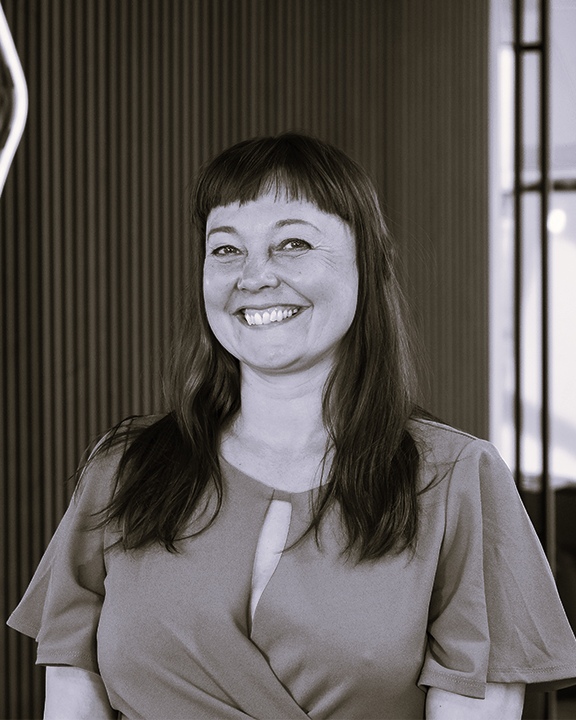
Founder
I’m an art school graduate who ended up running a record label in Lisbon before finding my way into PMO. Not the most obvious path — but looking back, the thread is obvious. I’ve always been drawn to complex, moving-parts problems, and I’ve always wanted to work differently.
That second part matters. Extended workforce is about people choosing how they work. I found my way to this space because I wanted that freedom myself — and now I’m here to help make it work better for everyone in the ecosystem.
I founded RedWizard in 2014 when I realised how fragmented extended workforce management actually is — and the impact that has on both individual and collective effectiveness. Coming from a PMO background, I saw that fragmentation differently to most. Where others accepted it, I saw a missed opportunity. My early work focused on proving that — building a cross-functional Centre of Excellence on a global programme that brought client teams and strategic partners together around the same table. When people with different perspectives start sharing stories and challenges openly, the opportunity becomes obvious.
I’m at my best working with mid-sized organisations where I can genuinely feel the difference we make.